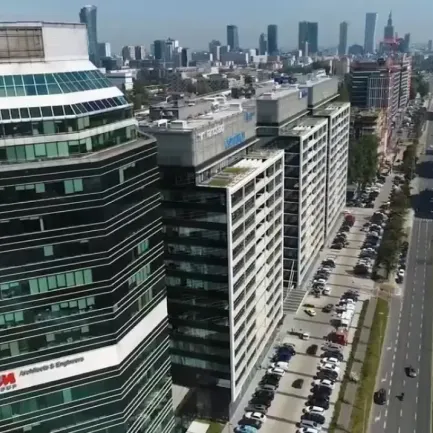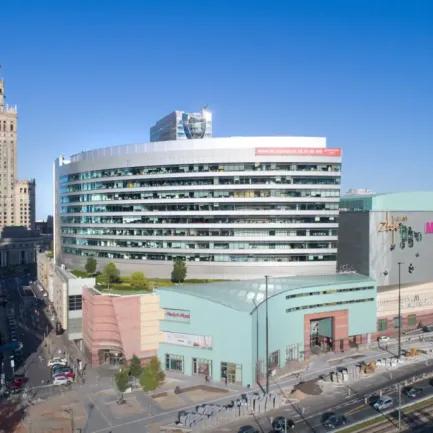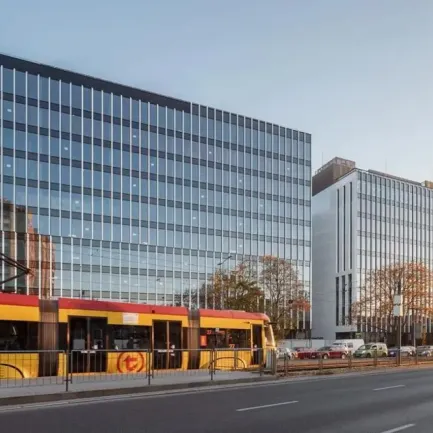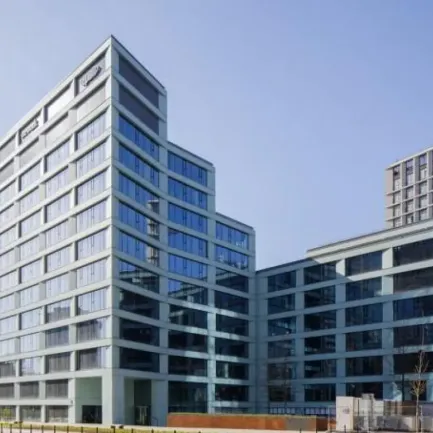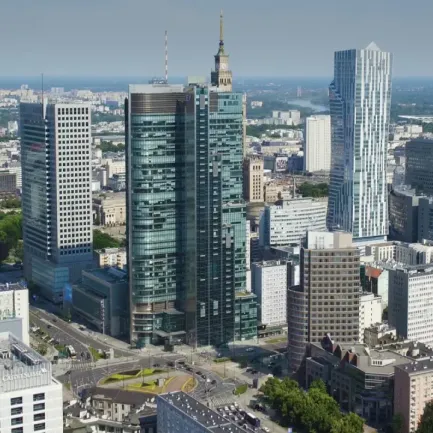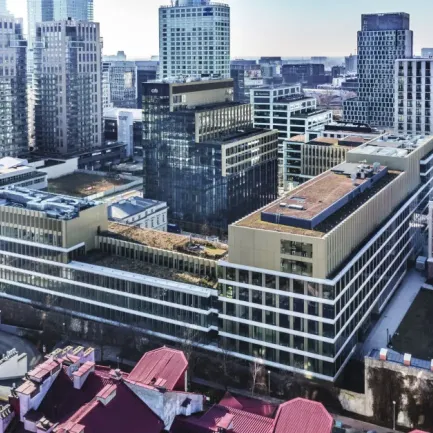

Right-bank districts are steadily gaining in importance – Praga North and Praga South are no longer seen as alternatives but a conscious choice for companies seeking office space. Lower rents, a strong sense of place and access to a local labour market are what tenants can expect there, says Joanna Andryszczyk, Associate Director, Office Department, Newmark Polska.
Warsaw’s office market has historically concentrated in Śródmieście, Wola, and Mokotów. The right-bank districts contain just 283,500 sqm of office space, accounting for a relatively small share of the capital’s stock at 4.5 per cent. Nearly 53 per cent of this total is located in Praga Południe, and 34.9 per cent in Praga North. Interest in the eastern side of Warsaw, however, is growing.
The eastern side enters the game
“The need for more sustainable urban growth is becoming increasingly evident. We were among the first in the market to recognise this, which led us to develop Centrum Praskie Koneser and now Drucianka Campus. Thanks to its central location and strong transport links, Praga North is becoming a natural destination for expansion. This is confirmed by the success of Koneser, which has attracted global brands such as PepsiCo, WPP Group and Google Campus for Startups. Public investment also plays an important role in strengthening the district’s business appeal, such as the pedestrian and cycle bridge built as part of the New Centre of Warsaw project, as well as the revitalisation of urban spaces,” says Ilona Koski-Lammi, Sales Department Deputy Director at Liebrecht & wooD. “The post-industrial architecture, the scale of development and the historical context create a unique identity that cannot be replicated in typical office projects.”
The development of the right-bank office market also presents an opportunity for diversification. “What drives tenants to relocate to the other side of the river is both good transport accessibility and lower leasing costs. Average office rents here stand at EUR 13–15 per square metre per month, with prime buildings commanding EUR 17–18. These rental levels are comparable to those in Służewiec and significantly lower than in central Warsaw,” says Joanna Andryszczyk.
Praga beckons with talent – is it its biggest advantage?
Approximately 39 per cent of Warsaw’s residents live on the eastern bank of the Vistula, according to data from Statistics Poland (GUS) as of the end of June 2025. “Job candidates from this part of the city are keen to work close to home, which highlights the growth potential of the residential market and the increasing role of the office as part of employer branding,” says Ewa Michalska, Operations Director at Grafton Recruitment. “During initial interviews, candidates are increasingly asking about parking availability, proximity to railway, rapid urban rail and metro stations, and overall commuting convenience. That’s why, to attract employees from other parts of Warsaw, such as Ursus, Włochy or Bemowo, companies should clearly communicate available commuting options. This works – Warsaw residents now have a more favourable view of the right-bank districts than ever before, appreciating transport improvements, particularly the opening of the M2 metro line.”
Among companies based in the eastern part of the city is the tech group Atende, which leases office space at Centrum Praskie Koneser, a revitalised mixed-use complex in Praga North. “Many of our employees, including some board members, come from right-bank Warsaw and towns east of the city. Additionally, proximity to the metro, trains and trams significantly improves commuting for other employees,” says Marcin Zalewski, Head of Administration and Investment at Atende. “For a tech company, what matters is access to talent, lower operating costs and infrastructure development that supports future investment. Another advantage is the unique atmosphere and vibrancy of Praga, which further enhances its appeal as a place to work.”
According to Jarosław Prawicki, Head of Office Leasing at AFI Polska, companies are increasingly looking for offices in locations that offer more than just workspace. “AFI Bohema is already fully let, which confirms that boutique, well-located office buildings also attract tenants on the right bank of the Vistula. Its tenants include both public institutions and technology companies such as FitQbe – part of the Pracuj.pl Group – and the FMCG company Gladio. They will soon be joined by an Enel-Med diagnostic and medical centre, which will serve both residents and office employees within the complex,” says Jarosław Prawicki.
IT, logistics and creative companies are already here
According to Newmark Polska, companies leased 41,400 sqm of office space in right-bank districts in 2025 – nearly four times the previous year’s total and twice as much as in 2023. “These locations are currently targeted mainly by logistics, distribution, warehousing, FMCG and e-commerce companies. This comes as no surprise – it is easier to combine office and operational functions in this part of Warsaw,” says Ewa Michalska.
Other major tenant groups include tech companies, start-ups and software houses. “The arrival of global players has been a significant catalyst for the growth of this part of the city. The opening of Google’s campus at Centrum Praskie Koneser boosted Praga’s profile and demonstrated that it could compete with Warsaw’s central districts. Thanks to the strong sense of place in the right-bank districts, offices support the development of organisational culture,” says Joanna Andryszczyk, adding that the presence of numerous companies and public institutions, including ZTM, highlights the diversity of activity on this side of the Vistula.
Will developers keep pace with demand?
Tenants have already given the green light by choosing offices on the right bank of the Vistula. Will developers boldly follow their lead?
“Praga North and Praga South are attracting growing interest from companies seeking office space, though the market remains small and fragmented, dominated by revitalised and mixed-use projects,” explains Joanna Andryszczyk. “Most projects completed on this side of the Vistula in recent years have already been leased. More are in the pipeline, but their delivery depends on tenant demand and pre-let levels. And although the vacancy rate, standing at around 6.4 per cent, could suggest availability, vacant space is mainly available in older Class B buildings. For tenants looking for modern offices in Praga North or South, this means securing space well in advance – at least two years ahead – or signing a pre-let at the project planning stage. In the case of a large tenant, this may act as a catalyst for launching a project or an additional phase.”
Revitalisations instead of office towers – shaping the office landscape on the eastern side of the Vistula
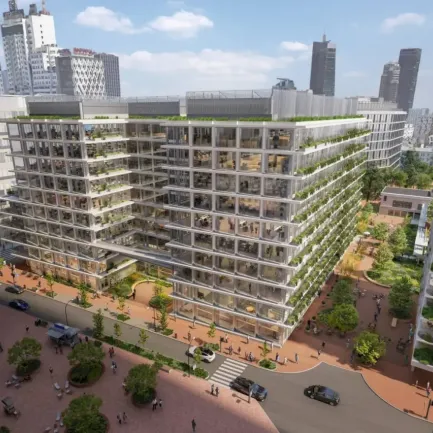
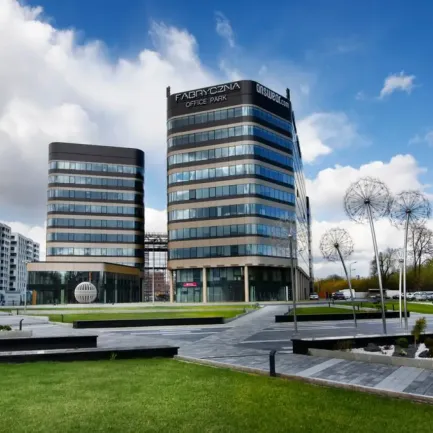
Market growth in the coming years will be driven largely by revitalisation projects and mixed-use developments combining offices, residential units and services. “This format best matches the character of this part of the city and the expectations of tenants seeking diverse work environments,” says Joanna Andryszczyk. According to the expert, the standard in this segment has been set by developments such as Koneser and Fabryka PZO. Opportunities also lie in larger office schemes, which require sufficient demand and proximity to metro stations, and whose delivery will largely depend on pre-letting. One example is Port Praski, which is expected to see office space added in future phases. Other notable projects planned to be developed in this market include SOHO and Drucianka Campus near Warsaw East Station, both of which are expected to be delivered to the office market of right-bank Warsaw in 2028.
According to Ewa Michalska, the challenges facing the office market include, in addition to the limited availability of modern buildings, underdeveloped supporting infrastructure, such as a shortage of hotels, conference venues and business services.
A place for unique projects
One thing is certain: right-bank Warsaw is no longer a pioneering market. “Key developments have been met with strong enthusiasm from both residents and tenants. And occupier interest in this part of the city is growing. Companies choose locations that offer quality and strong transport links, and are aligned with the character of the district. Both Praga districts hold significant potential for the development of the office market, which will evolve gradually rather than in leaps, and limited supply is likely to support best-in-class projects,” concludes Joanna Andryszczyk.
In the picture, from the left:
Joanna Andryszczyk, Associate Director, Office Department, Newmark Polska,
Marcin Zalewski, Head of Administration and Investment at Atende,
Ilona Koski-Lammi, Sales Department Deputy Director at Liebrecht & wooD,
Ewa Michalska, Operations Director at Grafton Recruitment,
Jarosław Prawicki, Head of Office Leasing at AFI Polska.